Type A Electrolysis
"...the biggest characteristic of this type of
electrolysis is the fact that the electrolysis voltage will
disappear when the battery is removed from the circuit."
|
When we have a 12 volt circuit that has a poor or missing ground, we
have an incomplete circuit that potentially pushes voltage into
surrounding components. Maybe it's an electric cooling fan motor
that has a
poor ground and is using the radiator
and coolant to complete the ground circuit. It may be fog lights
mounted on the bumper, grounding through rusted mounting hardware.
It could be other other add-on accessories, like radios, amps, or
cruise controls to name a few. It might be an engine mounted sensor
"leaking" voltage into the coolant. Perhaps the engine grounds have
been "lost" during engine work, allowing current to flow "the long
way" back to the battery. Other offenders include aftermarket
electric chokes, spark boosters and audio upgrades. The point is, typically this type of
electrolysis is a lost ground return path to the battery, and the
current is leaking into the coolant as it finds a way back to the
battery. The good
news is, it is relatively easy to test it, isolate it and fix it.
Of course the biggest characteristic of this
type of electrolysis is the fact that the electrolysis voltage will
disappear when the battery is removed from the circuit. If in doubt
about testing, jump back to the testing page
HERE. When it comes time for isolating the exact circuit, there are several
strategies we can follow.
-
Obviously, any loose or
dirty grounds must be repaired. Also look for corrosion at the
battery, and around the battery. Several main grounding points will
usually terminate within 18-24 inches of the battery. While a visual
test is important, cleaning the grounding points is highly
recommended. This is usually done by loosening the ground, cleaning
the mating surfaces with steel wool, sandpaper, or other abrasive
material, and re-securing. The use of die electric grease is not
necessary, but will reduce corrosion by blocking the oxygen exposure.
-
We also need to understand that
some circuits are battery fed circuits, and others are ignition switch fed circuits,
meaning that we might not be testing correctly if the ignition switch is
off. Taking careful notes about the characteristics of each problem
circuit can be an important shortcut to finding the root
cause, and zeroing in on the exact spot.
-
Most of the time removing 1 fuse at a time will be very helpful
in isolating the exact circuit. Once there is some isolation, further investigation along that
circuit will reveal more exactly the source of the electrical fault. A wiring
diagram will be very helpful to negotiate the twists and turns
of the branch circuits.
-
Sometimes by unplugging wiring harnesses you can get a change of
cooling system voltage that will give you a direction to follow. A wiring diagram
might still be needed to follow the circuits unless there is
sufficient exposure to the wire harness. Treating this type of electrolysis like an electrical draw
will most likely result in the problem being found. Tracing the circuit
be be time consuming and difficult, but it can be found.
Consider getting help from an experienced mechanic if this
becomes overwhelming.
-
Some have reported that during starter
operation the voltage spiked. I have neither seen nor verified
this, but if you encounter it, a thorough investigation of the
battery cables and engine grounding wires must be performed.
Remember that the battery ground MUST be connected to the engine
as well as the frame. All grounded components must have
continuity with the battery negative post. Running a second
ground, although usually not necessary, will not hurt anything,
and may improve starter efficiency.
-
Commonly found under the hoods of modern
cars are electric coolant pumps (sometimes called coolant after
run pumps), electric heater valves, and electronic thermostats.
Destructive voltage potential has never been closer to the
cooling system internals as it is now.
| |
|
|
|
|
| |
|
|
|
|
 |
 |
 |
 |
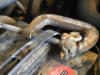 |
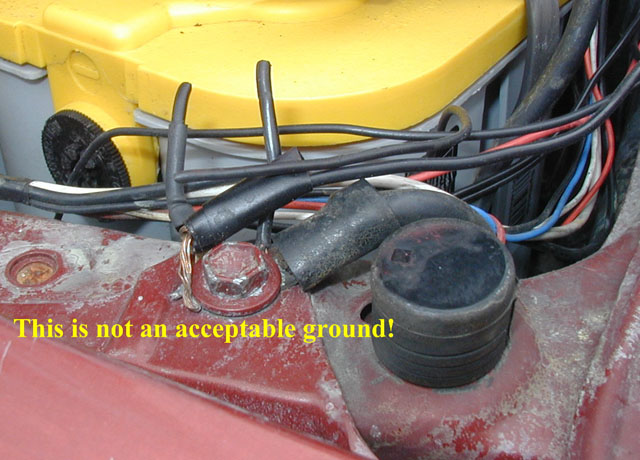
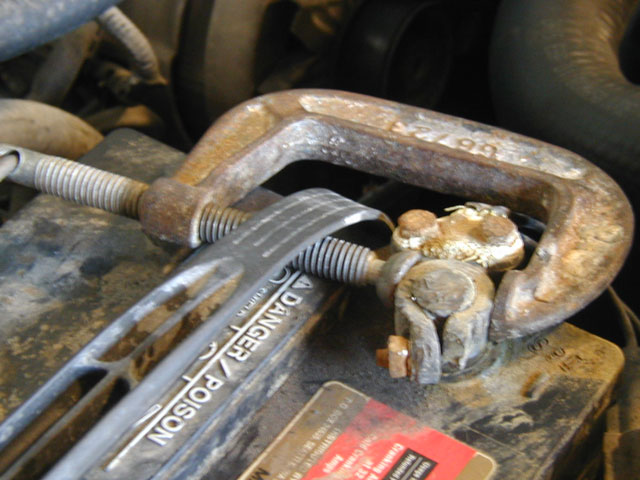
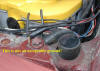
| Bad grounds always invite trouble. |
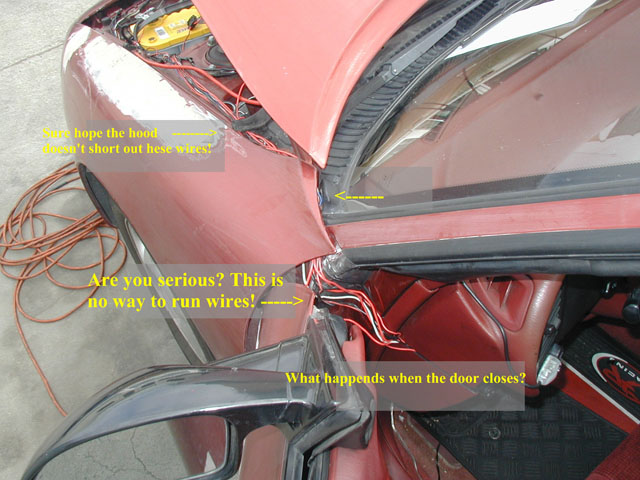
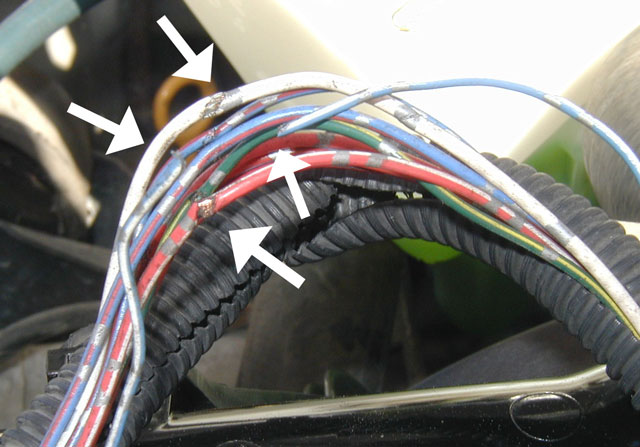
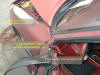
Poor wiring can cause fires! |
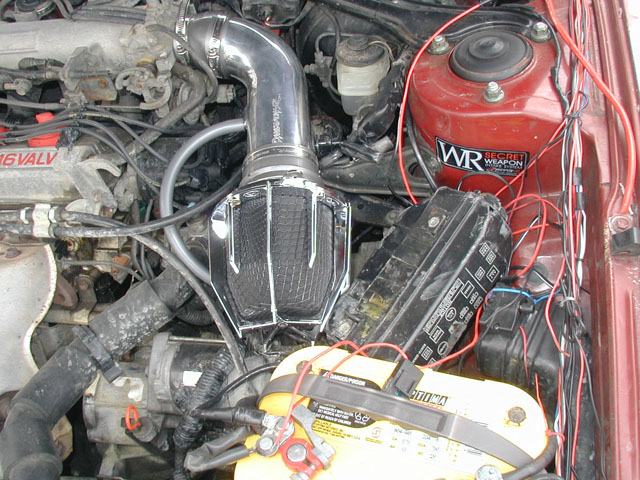
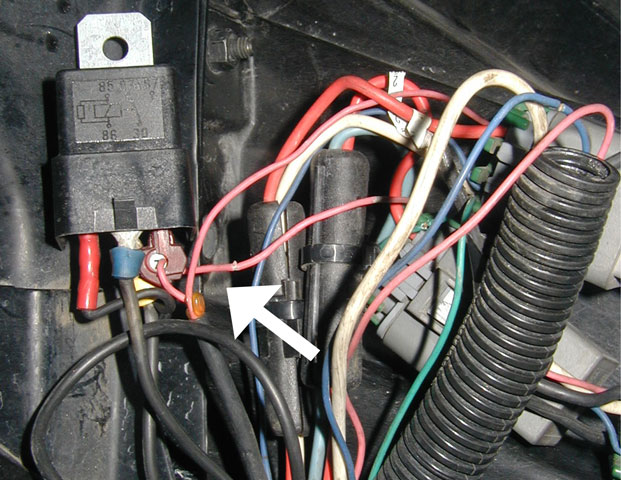
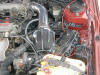
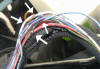
Lots of wires, and none of them are fused! |
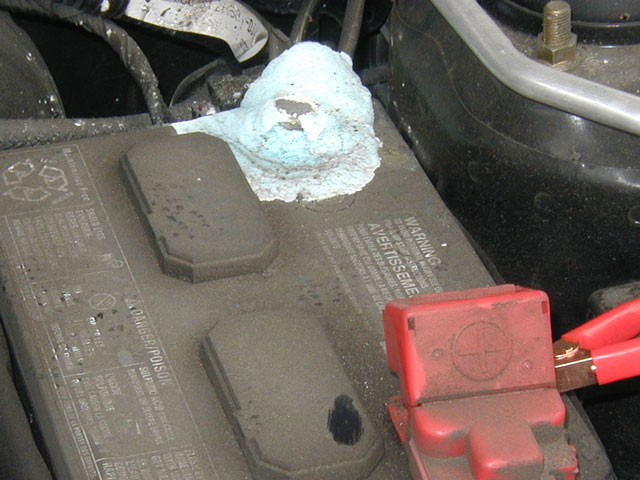
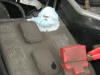
Dirty & corroded. |
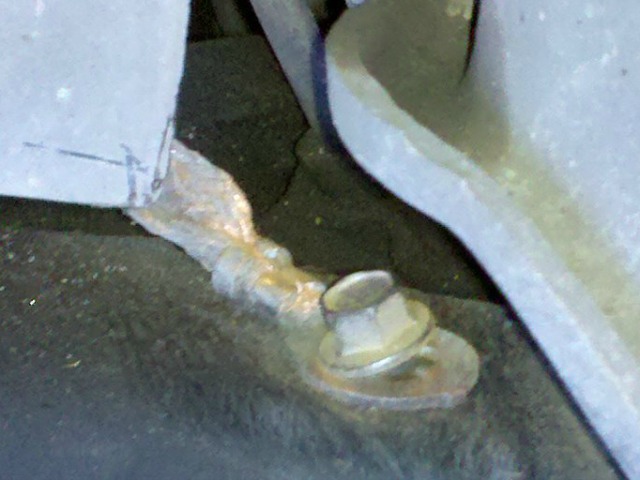
Well yes, a ground should be clean and tight, but... |
| |
|
|
|
|
| |
 |
 |
 |
|
| |
Broken wires cause lots of problems. |
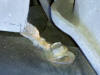
Body to frame ground on a T-Bird. |
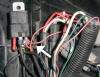
Perfectly good wiring from the factory. Now all botched up... |
|
Testing
| Type B | Type C |
Products |
Photo Gallery